Support without immobilization
Traditional athletic tape works by locking a joint down. That is genuinely useful for an acutely unstable ankle, but it comes at a cost: you lose the motion you need to perform, and immobilized tissue heals slower and weaker.
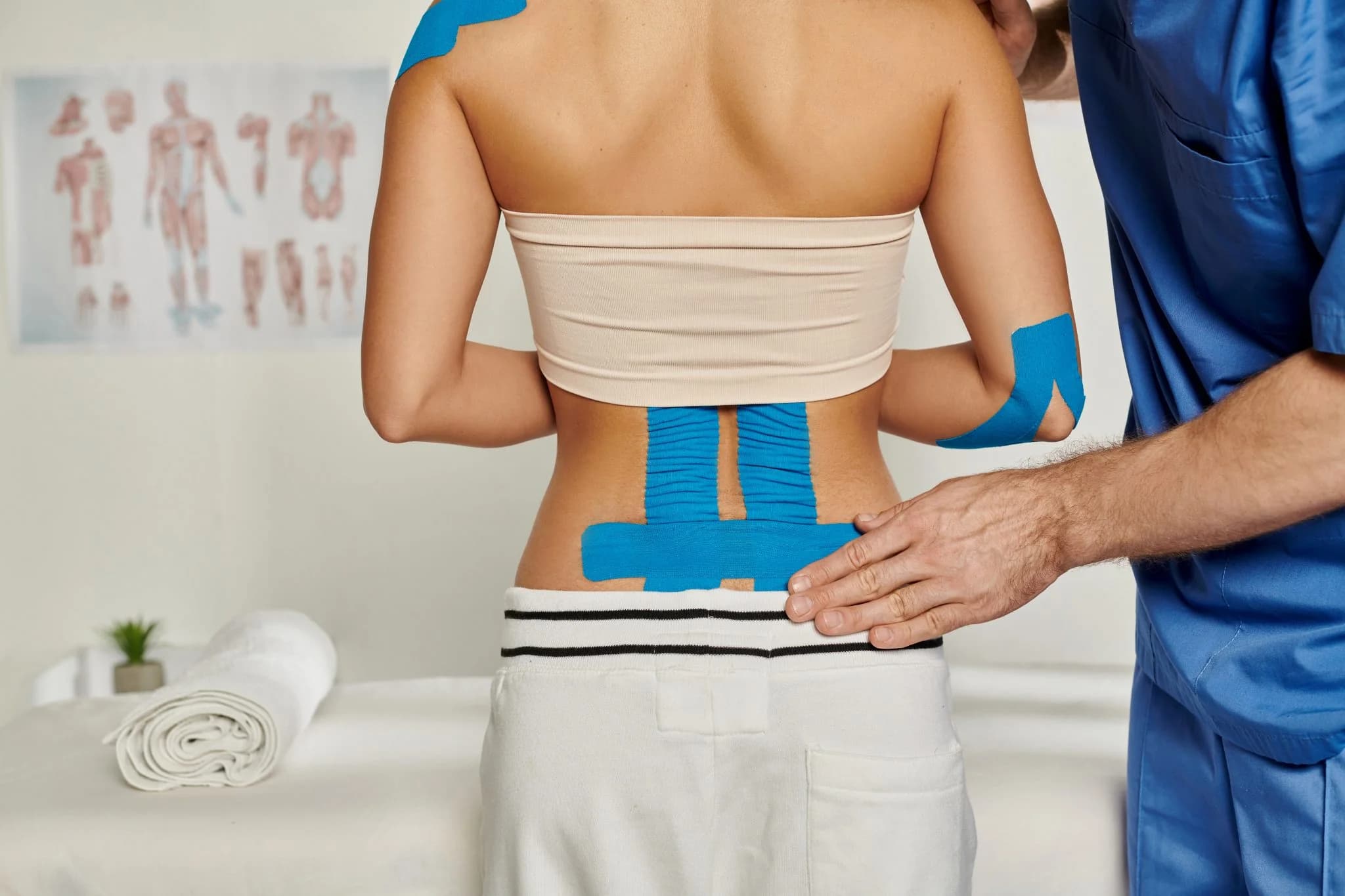
Kinesiology tape solves a different problem. It has elastic properties similar to skin, so it moves with you. It facilitates the body's natural healing process while providing support and stability without restricting range of motion.
What the tape is doing on your skin
Applied with the right tension, the tape gently lifts the skin away from the tissue beneath it. That microscopic decompression opens space in the interstitial layer, which increases blood flow, oxygen flow, and lymphatic flow through the area, which is why taping is particularly effective at reducing swelling and bruising.
The tape also provides continuous sensory feedback. That constant input to your nervous system improves your awareness of the joint's position, which often translates to better mechanics during activity and a subtle cue to avoid the movement that hurt you.
When we use it
We tape athletes before competition for support during play, patients recovering from acute strains where swelling is the limiting factor, postural cases where a gentle reminder to hold position between visits is valuable, and shoulders that need help staying out of the impinged position.
A quality application lasts three to five days including showers and workouts. We will show you how it should look and feel so you know when it is time to remove it.
Benefits of performance & kinesiology taping
- Support and stability without restricting motion
- Increases blood, oxygen, and lymphatic flow
- Reduces swelling and bruising
- Improves joint position awareness
- Provides benefit between office visits
- Water resistant and lasts three to five days
Conditions we use this for
Shoulder Pain
The shoulder trades stability for range of motion, which is exactly why it goes wrong so often, and why local treatment alone rarely fixes it.
Knee Pain
The knee is a hinge stuck between two joints that rotate, so it usually hurts because of what the hip and foot are doing.
Tennis Elbow & Golfer's Elbow
Tendon pain at the elbow that grips, lifts, and shakes hands, and that rarely comes from the elbow itself.
Plantar Fasciitis & Heel Pain
That stabbing pain on your first steps out of bed is the most recognizable symptom in musculoskeletal medicine, and one of the most frustrating to wait out.
Back Pain
The most common reason people find us, and one of the most treatable, once you know what is actually causing it.
Performance & Kinesiology Taping: common questions
How long does the tape stay on?
Three to five days typically, including showering and training. Pat it dry rather than rubbing it after you get wet and it will last considerably longer.
Will it irritate my skin?
Most people have no reaction at all. If you have sensitive skin or a known adhesive allergy, tell us and we will test a small patch first or use a hypoallergenic tape.
Can I learn to tape myself?
For simple applications, absolutely. We are happy to teach you. Complex applications around the shoulder or knee involve specific tension and direction that are much easier to get right with another set of hands.