We do not guess
Your first visit is an investigation. We take a detailed history, not just where it hurts, but when it started, what makes it worse, what you do for work, how you sleep, what injuries you had twenty years ago that you have stopped thinking about. That history usually points us most of the way to the answer.
Then we perform a comprehensive examination of the problematic areas, including orthopedic, neurologic, skeletal, and muscular assessment. We test range of motion segment by segment, check reflexes and sensation, and evaluate your posture and gait.
Imaging on site, when it is warranted
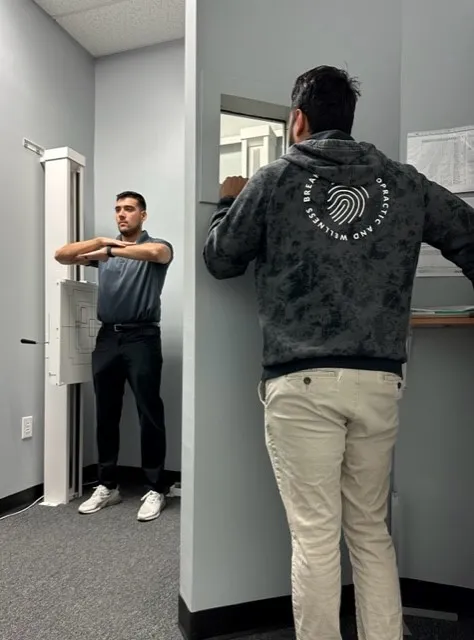
We have digital X-ray in the office and will perform imaging if your history or exam findings call for it. Digital imaging means dramatically lower radiation than older film systems and results available immediately rather than days later.
We do not image every patient. Radiography is warranted when there is trauma involved, when there are red flags in your history, when we suspect degenerative change or structural asymmetry, or when you have not responded to conservative care as expected. If you already have recent films or an MRI, bring them and we will review those instead.
The report of findings
This is the visit most practices rush and we do not. We sit down with you, put your images on the screen, and explain what we found in language that actually makes sense. You will see your own spine and understand what is happening in it.
Then we lay out the plan: what we recommend, how long we expect it to take, what it will cost, and what your insurance covers. You will also hear honestly if we do not think we are the right provider for your problem, in which case we will tell you who is.
Benefits of digital x-rays & consultations
- On-site digital X-ray with same-visit results
- Lower radiation exposure than conventional film
- Full orthopedic, neurologic, and postural examination
- A plain-English explanation of your own imaging
- A written plan with clear cost and insurance detail
- Honest referral out when we are not the right fit
Conditions we use this for
Back Pain
The most common reason people find us, and one of the most treatable, once you know what is actually causing it.
Neck Pain
Your head weighs about twelve pounds, and every inch it drifts forward multiplies the load your neck has to hold all day.
Scoliosis
Curve monitoring, pain management, and mobility support for children, teens, and adults, with honest scope about what chiropractic can and cannot do.
Herniated & Bulging Discs
A disc diagnosis is not a sentence. Most herniations respond well to conservative care without ever reaching an operating room.
Whiplash
The injury that often feels manageable for three days and then is not, and that becomes chronic when it is never properly treated.
Digital X-Rays & Consultations: common questions
Will I definitely need X-rays?
No. We image when your history or exam findings justify it, trauma, red flags, suspected degenerative or structural change, or a failure to respond to care. If imaging will not change what we do, we will not take it.
How much radiation is involved?
Digital radiography uses a fraction of the dose of traditional film. A typical spinal series is in the range of a few days to a few weeks of ordinary background radiation, and we use appropriate shielding and the smallest field necessary.
Can I bring imaging from another provider?
Please do. Recent X-rays, MRI, or CT studies are enormously helpful and may mean we do not need to image you at all. Bring the disc or report to your first visit.
What should I bring to my first appointment?
Your ID, your insurance card, any prior imaging or reports, and a list of medications and supplements you take. If you were in an accident, bring the police report or claim number as well.